
Acrylic lacquer wash
Materials:
- acrylic lacquer
- distilled water (or soft water)
- rosin and talc
- arabic gum
- shellac
- asphalt
- acetone
- turpentine
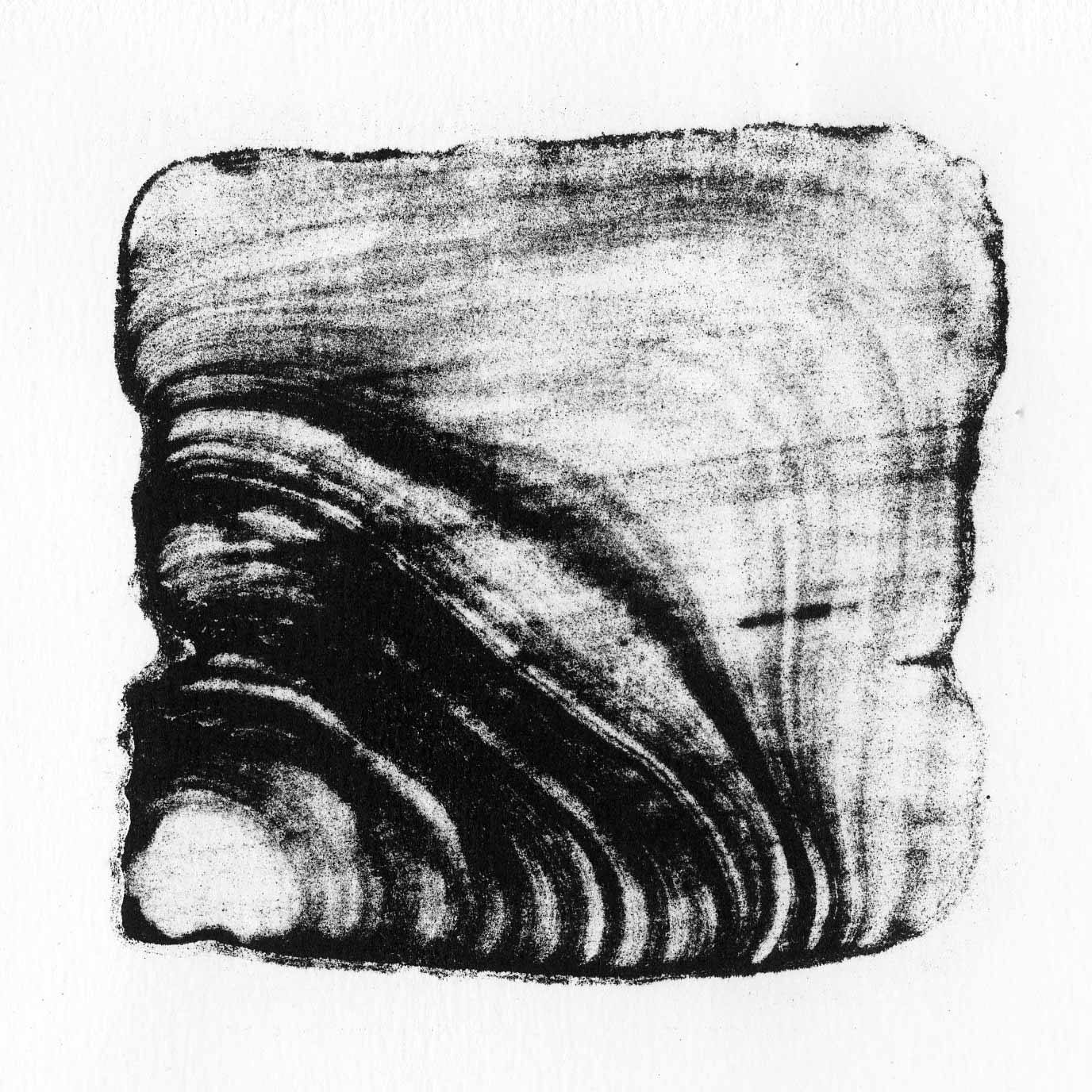
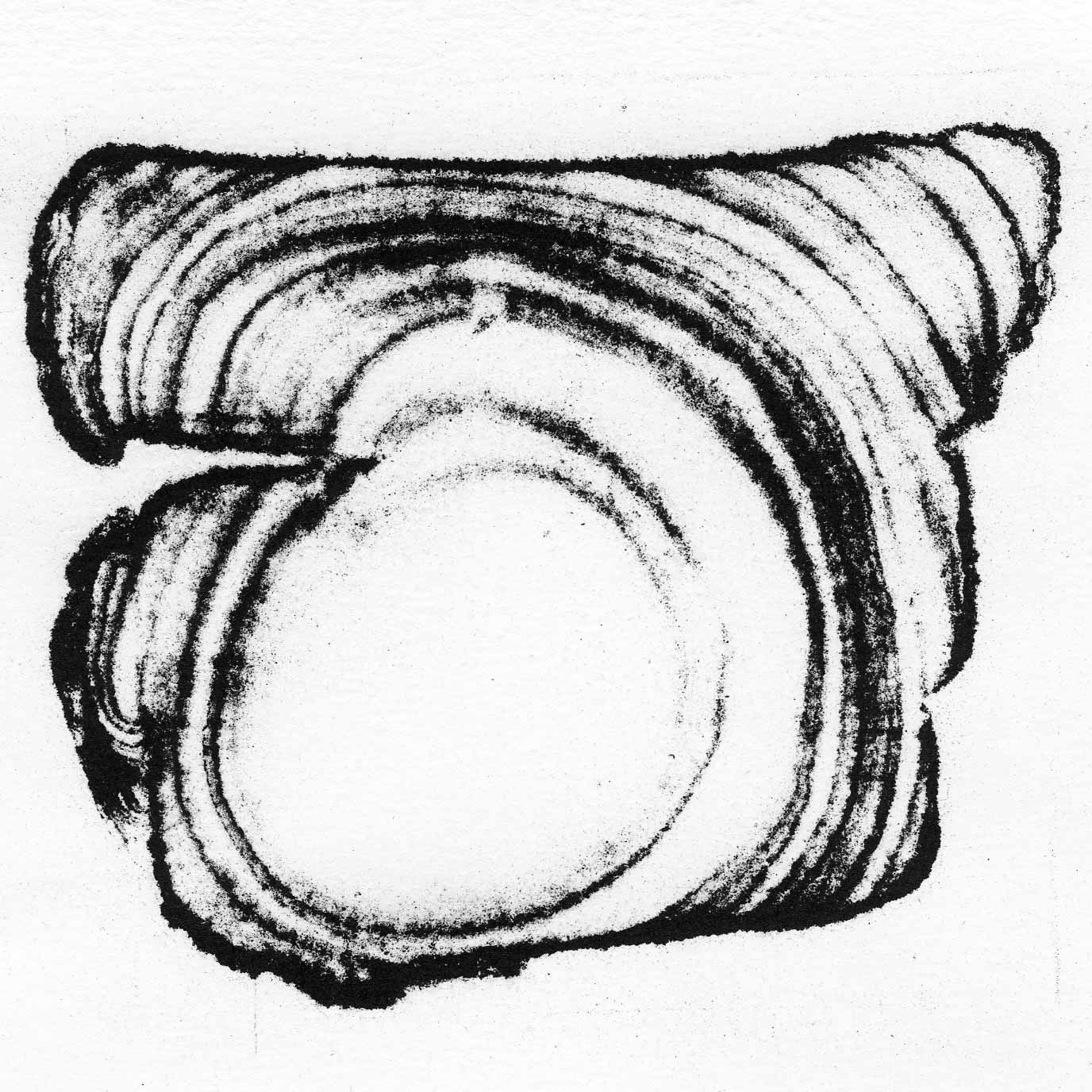
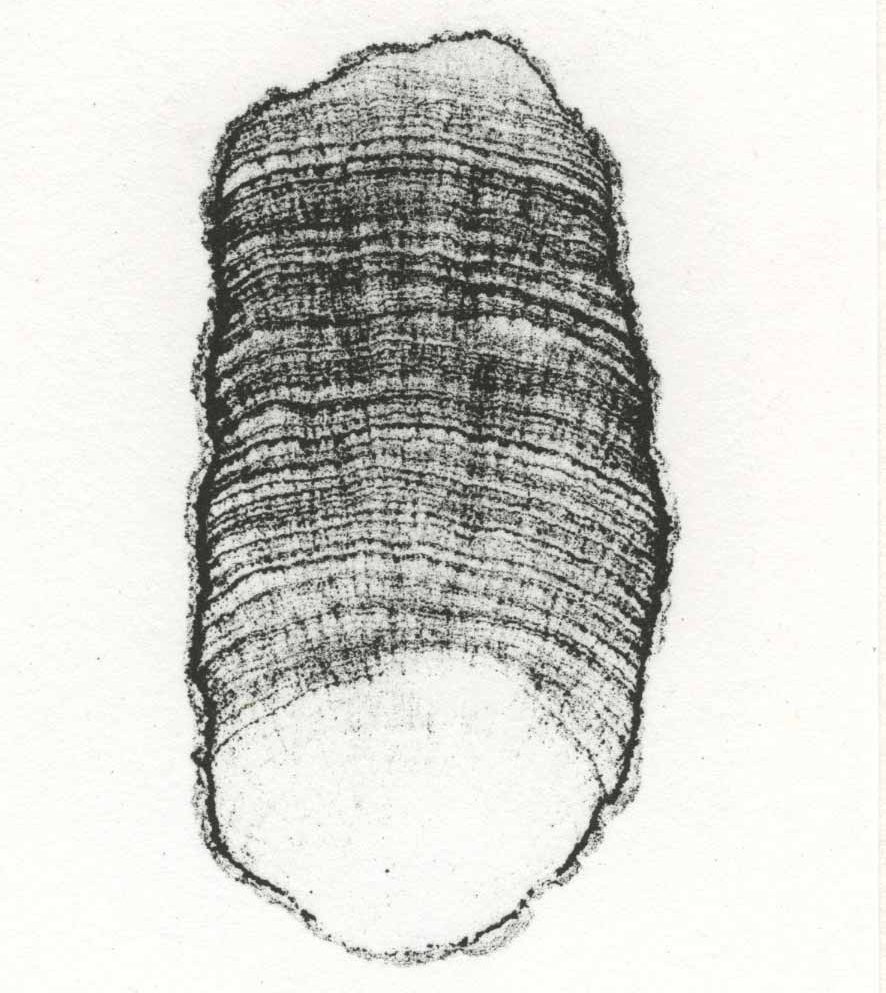
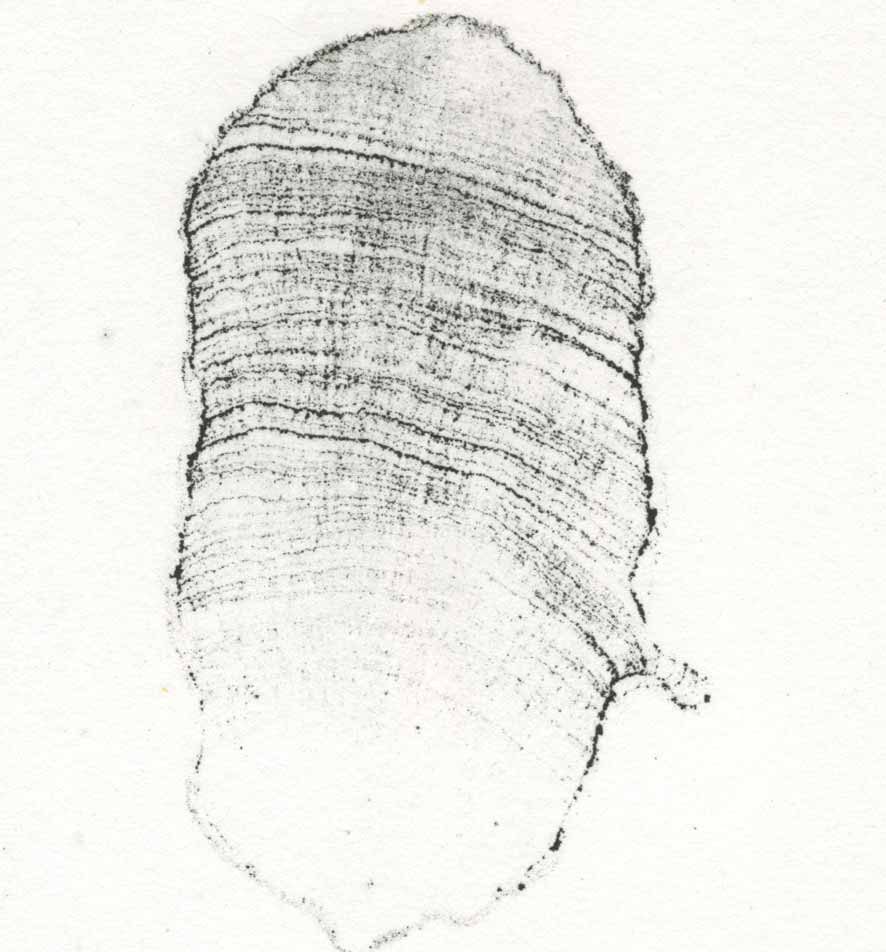
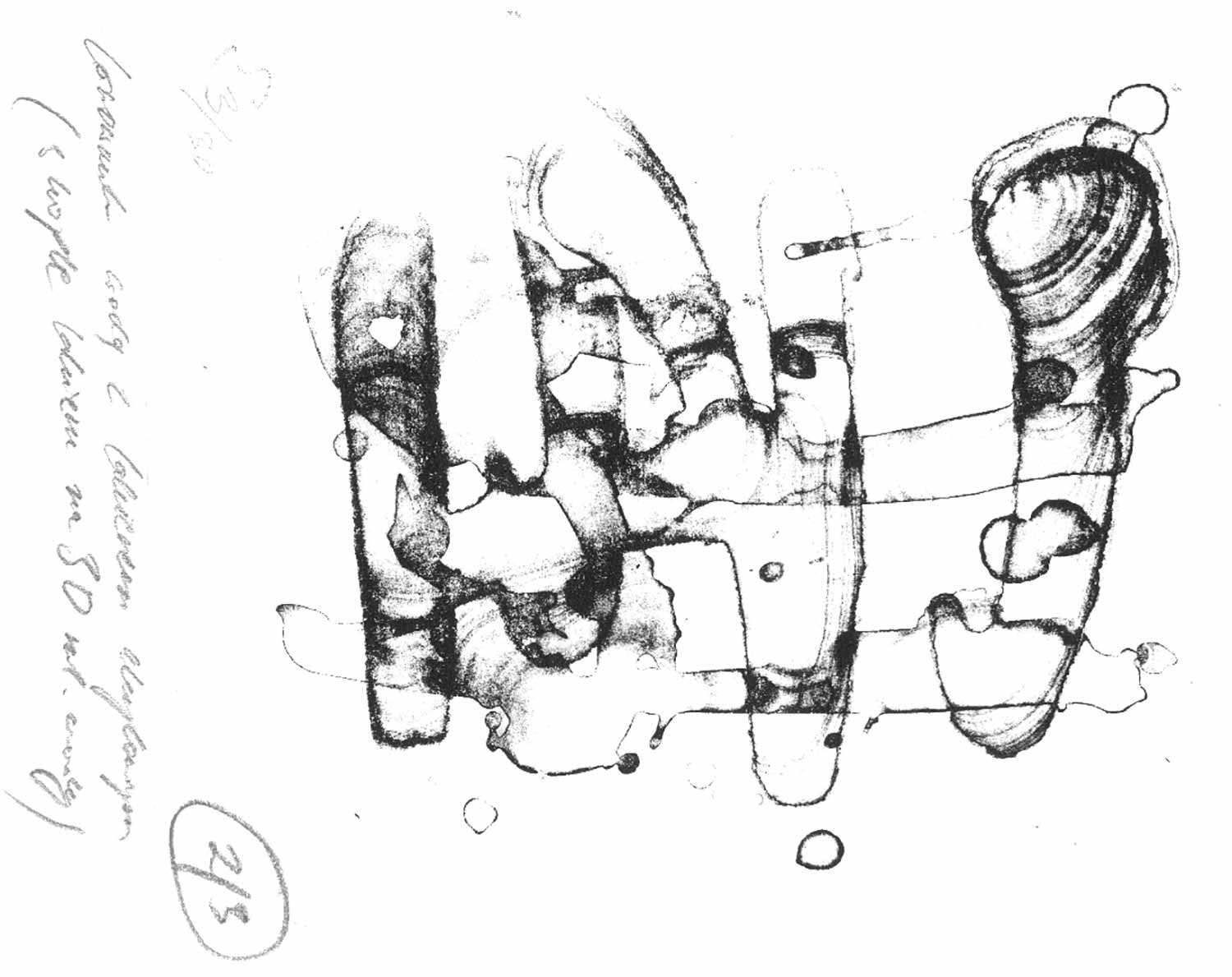
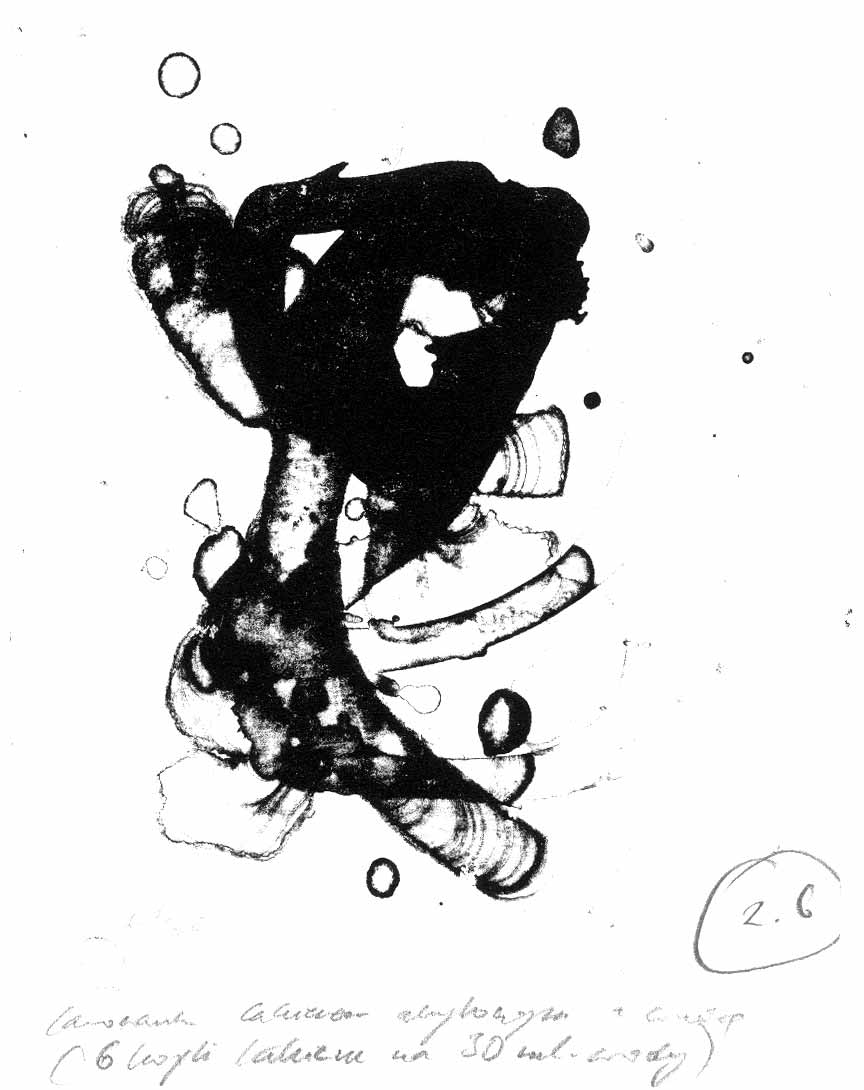
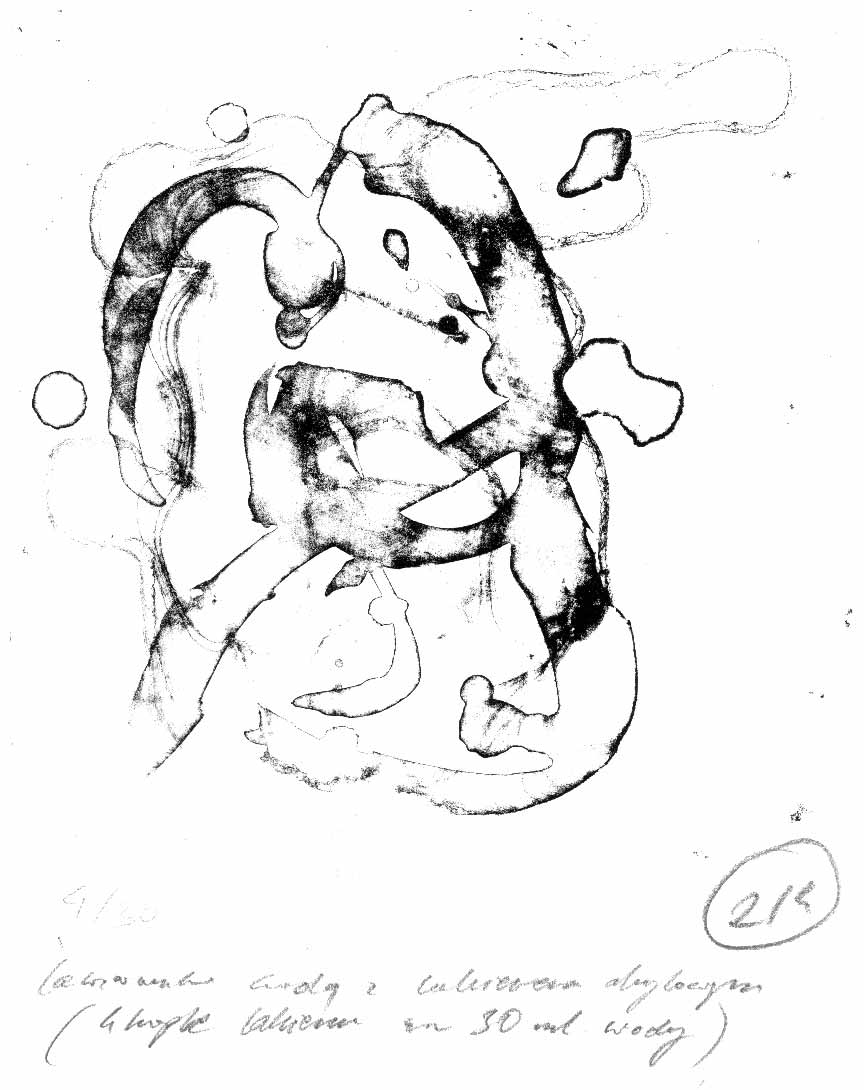
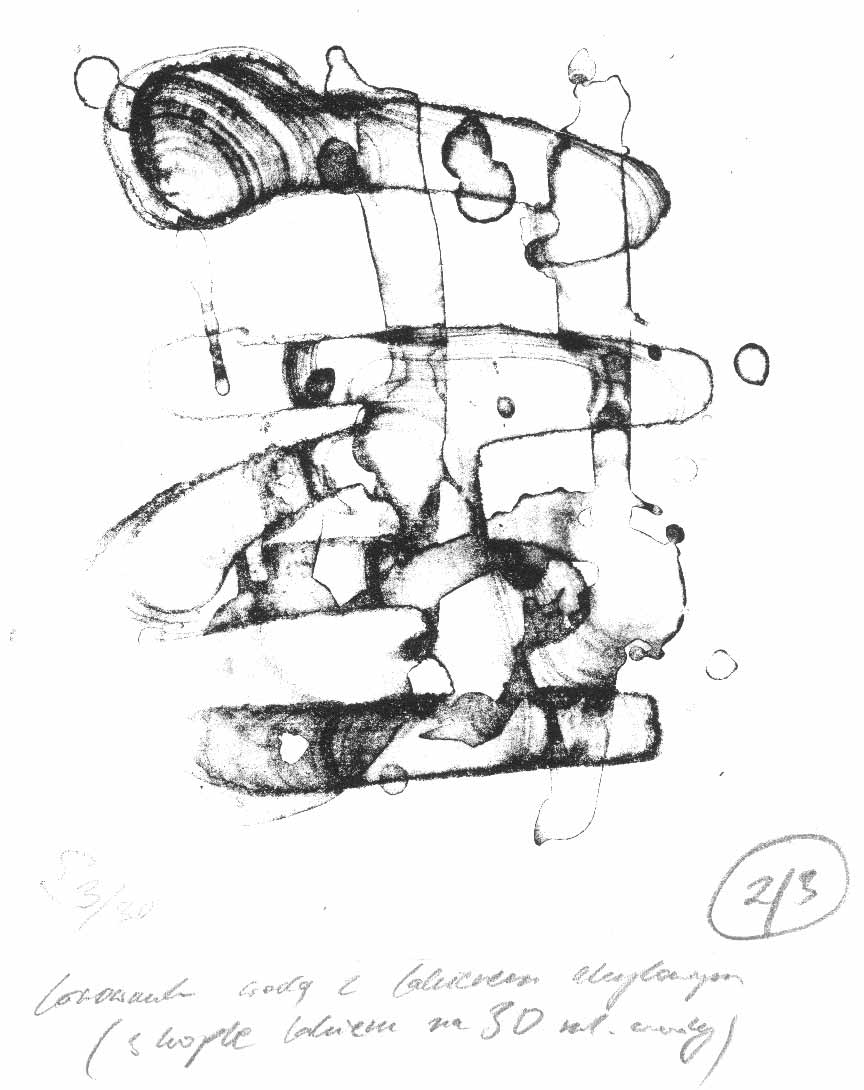
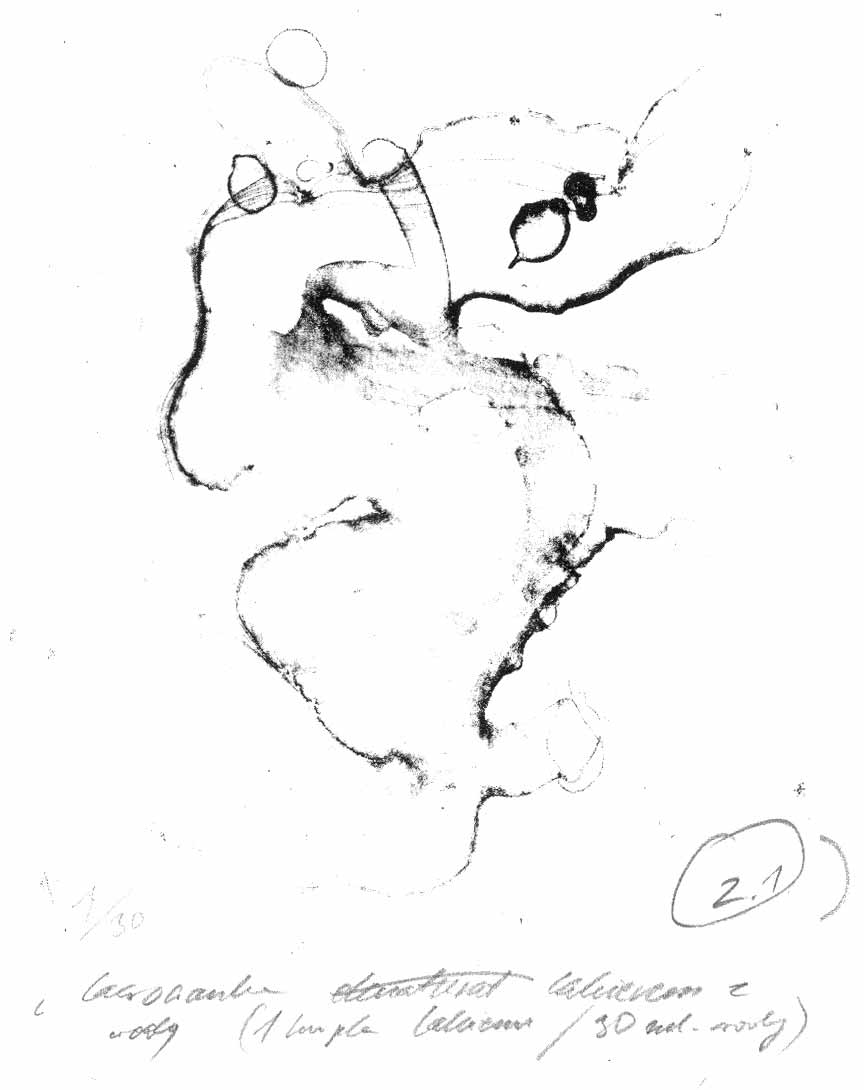

The acrylic lacquer wash is an interesting technique – firstly because of the effects, and secondly – the lacquer used here is an example of use of new materials in lithography.
My analysis shows that this technique has not been described in any of the studies I know, which allows me to consider myself its author.
Ecological acrylic lacquer belongs to the substances that mask the stone. A thin layer is neutral to the stone but it “blocks” the places covered with it. After the lacquer is removed they can be greased or sensitized to water. Acrylic lacquer it ideal for lithographic purposes – it is diluted with water but when it dries it becomes water-resistant. It is also acid-resistant.
This substance is transparent but, similarly to gum arabic, you can colour it, which greatly simplifies the work.
A lacquer wash is very similar to the Lo-Shu wash. The visual effect is similar but we get a negative.
The lithographic stone should be grinded with fine carborundum (minimum # 220). A wash poured on a roughly grated surface will not be sharp.
Add one to several drops of acrylic lacquer to 30 ml of distilled (or mild) plain water and mix them well. The more acrylic lacquer, the darker the veins will be.
Paint with the mixture. The substance is colorless – for a greater control it can be mixed with sangwine. The wash should be applied in layers that have a certain volume (they will not dry out right away).
After completely drying the wash (several hours, a day to be safe), you can apply further layers. The subsequent layers do not dissolve the previous ones.
The first etch is made with gum arabic without acid.
When the gum dries, the varnish should be washed out with acetone. Carefully – not to wet the surface with water. Drops of water will dissolve gum and may cause gray, black stains and streaks. After thoroughly washing the drawing, the stone should be covered with shellac and then with asphalt and finally dried (wait a few minutes).
Then, wash the gum arabic away, moisten the surface and roll up the stone slowly.
The second etching depends on the drawing.